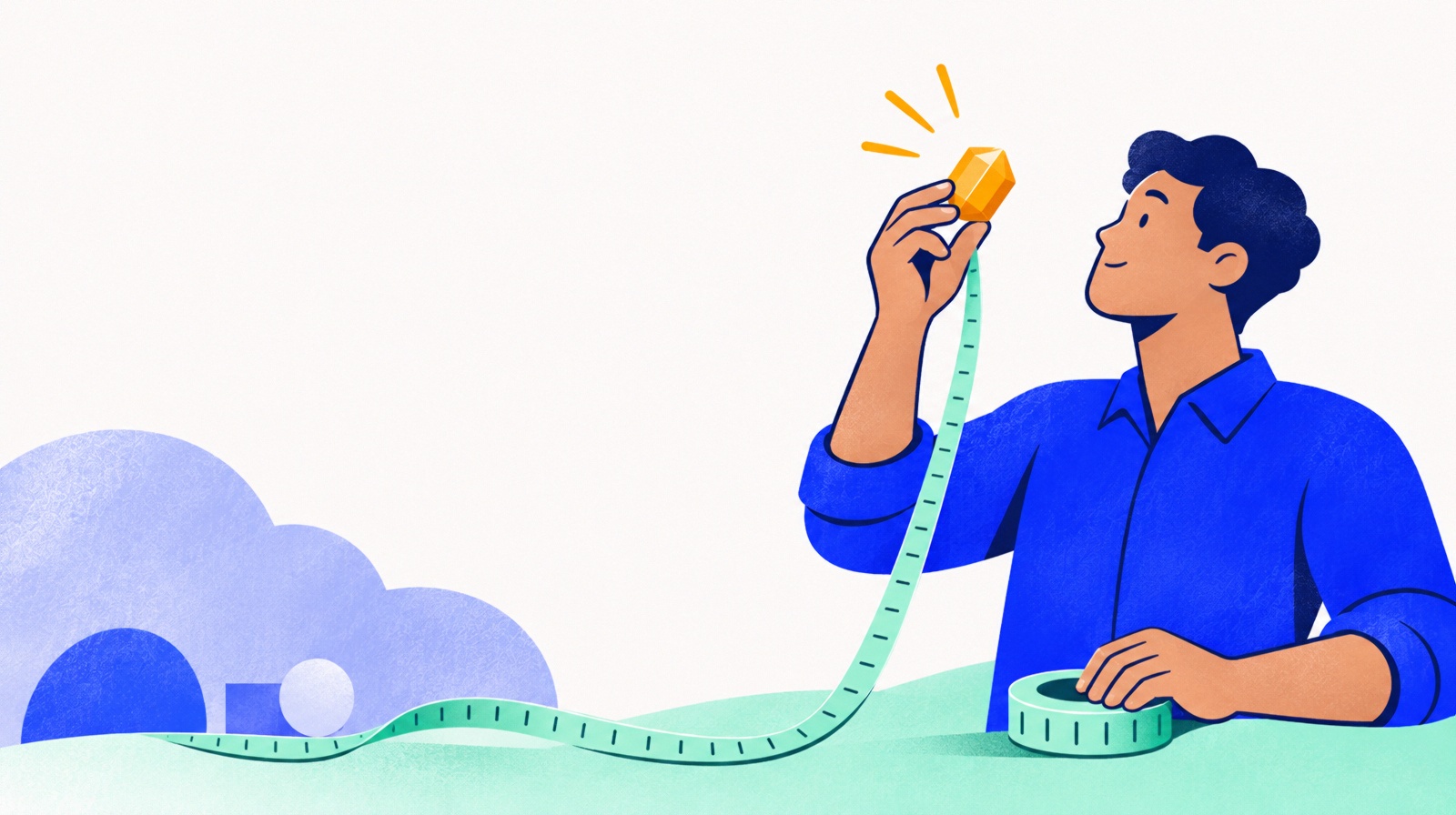
For decades, the field of Human Resources has seemed obsessed with measuring everything: employee satisfaction, performance, candidate capabilities...
Measuring this type of data is the best way to obtain direct, objective, and comparable information. However, when the object of our analysis is people, measuring certain capabilities or abilities, such as soft skills, is especially complex. Or, better yet, it "was," because thanks to the development of disciplines such as psychometry already the arrival of new technologies, assessing key skills and traits of human talent is becoming a little easier.
Artificial intelligence, Big Data, applied neuroscience, and biometric sensors are redefining the limits of what we can measure. At the moment, we can't determine the extent of a person's resilience, but we can predict whether they will withstand a highly stressful event or collapse.
We know what we can do today, but what will happen tomorrow? Let's look a little into the future and analyze what possibilities the combination of psychometrics and technology will offer us.
Psychometrics today: current applications
Personality, intelligence, and cognitive and emotional skills tests are part of daily routine in the personnel department when it comes to recruiting new employees.
Within the selection process, psychometric tests help to identify personality traits to assess whether a candidate's skills are compatible with the company's culture. This makes it easier to predict whether there will be a good fit.
They are also evaluated cognitive skills such as logical reasoning, attention, or decision-making under pressure, in order to be able to predict how that person will perform if they become part of the staff.
In the field of talent developmentPsychometric tools help identify skill gaps and even leadership potential. This makes them useful for designing career paths that are better aligned with each employee's natural strengths.
There is no doubt that psychometrics is very useful in talent management, but also has its limitsThe tools used are not free from bias, and even if they are, the results can be misinterpreted or misused. Furthermore, we know that some tests fall short of measuring the true complexity of human behavior.
Does this mean that psychometrics is no longer useful? Not at all. This discipline continues to be very useful, but it must adapt to changing times and evolve, taking advantage of the benefits that technology can bring. Which, it turns out, is exactly what it's doing.
The future of people and organizations are Skills.
Will you join us?
New technologies applied to psychometrics: the beginning of a new era
As we've just noted, psychometrics is undergoing a transformation. Thanks to emerging technologies, the possibilities for observing, analyzing, and understanding human behavior are expanding significantly.
If before we used a standardized test and made a manual interpretation, today algorithms can create customized tests and objectively evaluate results by comparing hundreds of variables.
One of the most significant advances in recent years has been the integration of AI and machine learning in assessments. These allow tests to be adapted in real time based on user responses, personalizing their experience and improving the accuracy of the results.
Additionally, data beyond the response itself can be analyzed, such as microexpressions, typing patterns, or response time. This allows us to extract information that a human evaluator wouldn't easily detect.
The Big data and people analytics systems They are also reshaping the landscape. They make it possible to cross-reference psychometric results with performance metrics, turnover rates, peer feedback, etc., and thus obtain a more complete and realistic view of the type of talent in the organization, what skills they have and lack, what the work environment is like, and so on.
All this has given rise to a series of benefits that would have been unthinkable a few years ago:
- Talent decisions are now more objective and faster because they are based on evidence.
- The presence of unconscious biases in the selection or promotion of people is reduced.
- More precise organizational diagnoses are made, which helps anticipate potential crises.
- Facilitates the identification of hidden potential and the personalized development of skills.
- Make assessments more accurate and less invasive.
How far should we measure? Ethical risks and dilemmas
With new technologies applied to psychometrics, we can measure many variables and do so in depth, which has sparked an important debate about the ethical nature of doing so.
With current tools, we can access intimate data about people, such as their emotions or neural patterns. This makes the line between professional assessment and surveillance begins to blur.
In addition to the overexposure of individuals, another of the ethical dilemmas is how data is processed. Although these data are collected for practical purposes, they can also end up being used to label, exclude, or discriminate against people based on automated or misinterpreted criteria. Some say that the excessive use of psychometric measurement tools can increase the myth of the "perfect candidate" and negatively impact the diversity in companies.
No less important is the risk of automating biasesWe believe that AI-based systems are objective, but the truth is that they have been fed historical data that, in most cases, is biased. Thus, under the false belief of objectivity, we may be perpetuating inequalities instead of combating them.
All this leads us to think that the psychometrics of the future needs much more than advanced technology, it requires some ethical frameworks that are robust and that respect human depth. Because not everything that can be measured must necessarily be measured, nor does it necessarily have to be part of a business decision.
Futuristic scenarios: what awaits us in a few years?
Let's travel to the not-too-distant future of 2035. In just a decade, the world of work has changed radically, and psychometrics has gone from being something applied occasionally in the selection process to becoming part of workers' daily lives.
Let's imagine a hypothetical technology company called TechNova3000, which has been a leader in its segment for years and also applies its own technology to its internal processes. All of its employees wear a smartwatch on their wrist that measures their emotional state. The company knows if they feel stressed before a meeting or a specific task, and the AI suggests they take a five-minute break to regain their emotional balance.
At first glance, technology helping to take care of employees' mental health sounds like a great advantage. But if we think about it, the measurements TechNova3000 is taking represent an invasion of their privacy at a very profound level. In this context, it wouldn't be surprising if some employees began to wonder, like, why does my boss need to know I'm nervous or frustrated if I don't want to share it?
This sounds like science fiction to us in 2025, but if you think about it, we're not that far off. Many of us wear watches that measure our heart rate and other parameters; it wouldn't be difficult to link them to an app that would allow third parties (in this case, the company) to access that information.
Psychometrics has always sought to understand human beings through objective data, and now that it is developing in parallel with technological advancement, a paradox arises: The more we can measure, the more delicate what we measure becomes.
We're closer to the tipping point than we think, and it's time to redefine the boundaries between efficiency and ethics, prediction and privacy, control and trust.
Yes, technological tools that measure human capabilities are very useful for selecting candidates or deciding who should be promoted within the company, but they cannot be used without oversight. make sure that we don't measure anything beyond what is strictly necessary to be able to make a decision that is as objective as possible.
For the psychometrics of the future, the challenge is to better understand individuals, not to use technology to exert control. This will only be possible if we use technology as a complement, without ever replacing human judgment. Because no algorithm, no matter how advanced, will be able to fully capture human complexity.
Perhaps the greatest advance we can aspire to in this discipline It's not about measuring more, but about measuring better. Doing so ethically, conscientiously, and with a commitment to creating work environments where technology enhances humanity, rather than replacing it.